

Planetary Health Check: 7 of 9 boundaries breached
24/09/2025
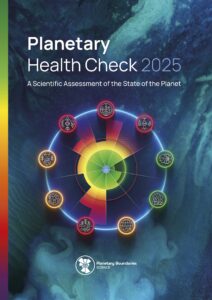
Seven of the nine planetary boundaries, processes that maintain the stability and resilience of Earth, have now been breached, according to the 2025 Planetary Health Check report.
The findings in this second-annual assessment underscore the growing impact humans are having on the climate, biodiversity, oceans, and ecosystems, edging our planet closer to tipping points with potentially irreversible consequences.
“More than three-quarters of the Earth’s support systems are not in the safe zone. Humanity is pushing beyond the limits of a safe operating space, increasing the risk of destabilising the planet,” said Johan Rockström, co-author of the report and co-chair of the Earth Commission.
Oceans and Resilience at Risk
Produced by the Potsdam Institute for Climate Impact Research, the report finds that humanity has crossed the ocean acidification boundary for the first time, pushing marine ecosystems beyond safe levels. Only two planetary boundaries remain within the safe zone: aerosol loading (air pollution) and the stratospheric ozone layer.
The report also highlights how Earth’s natural resilience, built through tightly coupled interactions among ecosystems, the climate, and other planetary processes, is weakening. Carbon sinks on land and in the ocean are saturating or turning into sources, global warming is accelerating, and early warning signs of tipping behavior are emerging.
From Safe to Safe and Just
The Earth Commission builds on the planetary boundaries framework, but adds the dimension of justice by defining safe and just boundaries that protect both people and ecosystems, while ensuring minimum access to essentials for a dignified life.
The Commission’s work also focuses on identifying boundaries that are possible to downscale for actors like companies, cities and nations, as well as charting concrete pathways that can bring humanity safely back within Earth’s safe and just operating space.
Albert Norström, the Commission’s science director and co-author of a chapter on potential solutions in the report, emphasizes that the solutions are just as important as the diagnostics of the state of the planet.
“It is encouraging that a growing number of actors around the world are beginning to put the boundaries into action. From national biodiversity strategies to companies setting sciences-based targets – the boundary framework can inform real-world decisions,” said Norström.
