A global boundary for chemical pollution
15/10/2026
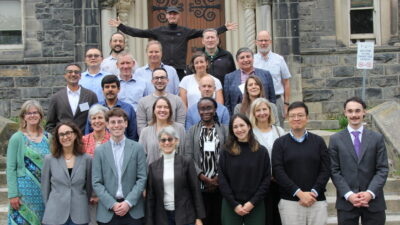
Members of the Earth Commission and an international group of chemical pollution experts agreed last month on how to define safe and just boundaries for “novel entities” or chemical pollution, synthetic and naturally occurring chemicals and materials that increasingly affect the planet and people’s health.
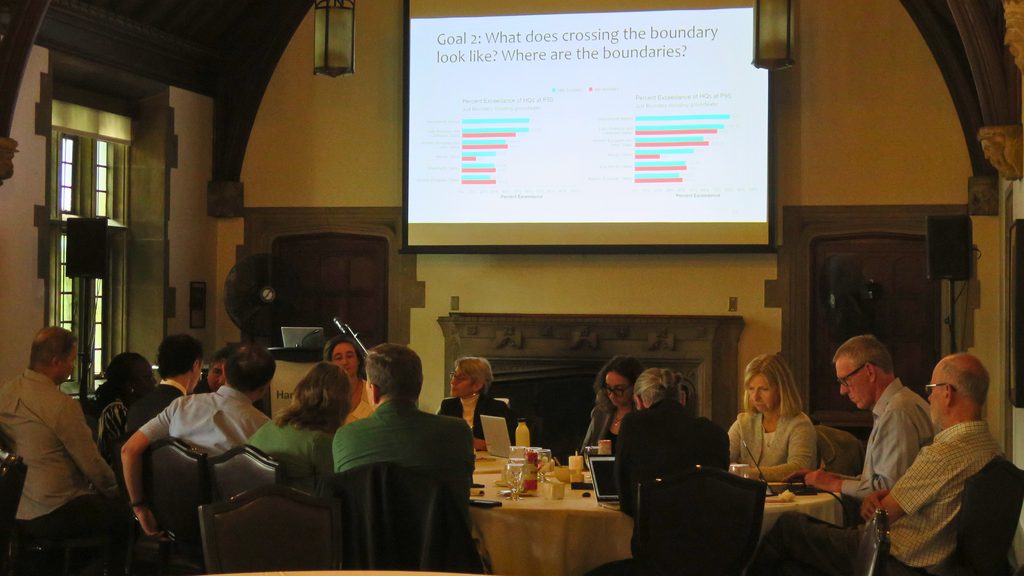
The workshop, hosted by Earth Commissioner and University of Toronto Professor Miriam Diamond and co-lead Zhanyun Wang, examined where to place a safe boundary, which safeguards the resilience of the Earth system, and a just boundary, which minimizes harm to human health. Participants also assessed whether humanity has crossed either boundary.
To do this, researchers compared measured concentrations of chemicals in the environment and in people with established safety benchmarks, providing a practical way to assess whether chemical pollution has hit harmful levels. This work was made possible by two of the most comprehensive databases yet of chemical measurements in the environment and in people, both of which were compiled by the Earth Commission group.
Participants at the workshop in Toronto reached a consensus on both the boundary definitions and their placement. But the precise thresholds and assessment results will not be released until they have been peer reviewed and published.
“Scientists have tried for nearly two decades now to set a boundary on chemical pollution,” Commissioner Miriam Diamond said. “Having one can give us a clearer answer to the question of how much chemical pollution is affecting the planet and humanity and which chemicals are the major culprits. And with that answer, governments, businesses and the public can take action to reverse damaging effects.”
Why it matters
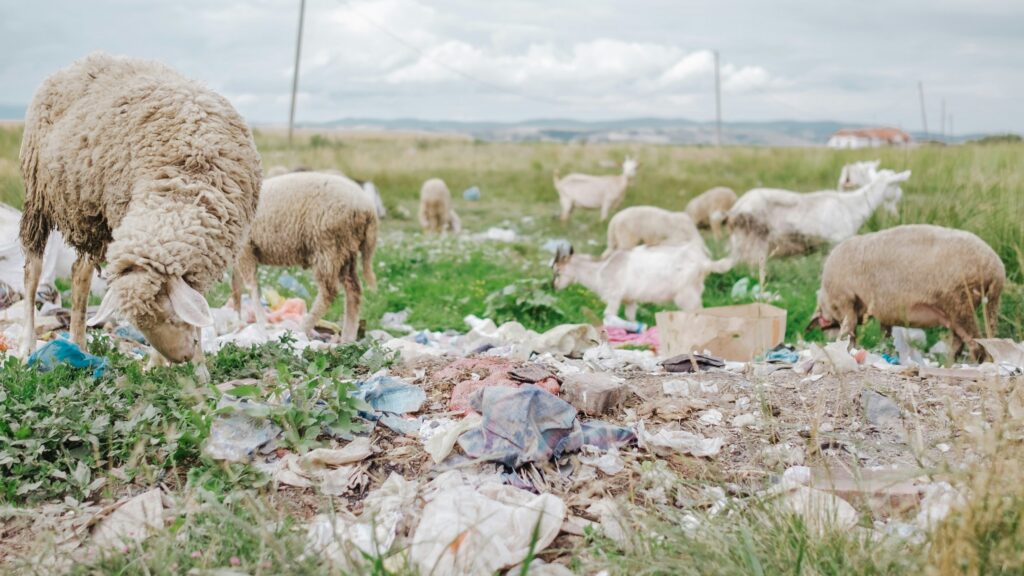
Chemical pollution includes synthetic chemicals, naturally occurring elements for which humans have changed their abundance, plastics and other manufactured materials whose production, use, and release impact ecosystems and people.
Earlier proposals were unable to come up with a tenable boundary but called for preventative measures based on mounting evidence of harm. Instead, the Earth Commission’s approach is based on “operational precaution”: reducing chemical pollution to levels that protect people and ecosystems, while recognizing that some risks will remain. The approach provides clear and strong evidence to direct efforts to reduce impacts.
New evidence base
The workshop drew on two new databases to underpin its work. They are the largest known global compilations of environmental measurements and human biomonitoring data, covering more chemicals and countries than previous efforts.
The databases also pair measurements of how much of a chemical is found in the environment or the human body with safety guidance values established by governments around the world. This makes it possible to compare real-world exposures with the levels considered safe for people and ecosystems.
“This new database helps us see more clearly where chemical pollution is concentrated, who is most exposed to it, and where action is needed most,” said Albert Norström, the Earth Commission’s Science Director, who participated in the workshop. “It illustrates the value of bringing researchers from around the world together to tackle this global challenge.”
Discussions also highlighted major gaps in the available data. Perspectives from Chile, Nigeria and other under-represented regions underscore the risks faced by regions where chemical monitoring and human biomonitoring remain limited.
Participants are now continuing the analysis and preparing a co-authored paper that will summarize the workshop’s reasoning and evidence. A draft is expected by the end of 2026, with publication anticipated in 2027.